• Imagen 1 Saving Costs on a Vehicle – Buying a Hybrid
    How would you feel if you could actually save on buying, and driving, a car? Hybrid vehicles can give you this advantage. Whatever make or model you buy, you can get this benefit whenever you invest in a vehicle in this category. How can you save on the expenses? Here are a few points to consider.
  • Imagen 1 Ways in which the Bicycle Scheme Works
    While many countries have implemented the bicycle scheme with great success, others are not quite familiar with how the system works for the benefit of both the employer and the employee.
  • Imagen 1 The Fuel-efficient, Pollution-free, Family Vehicle
    Since its introduction in the market in 2005, the Highlander has remained one of the favorites in the fuel-efficient, safe, family SUV category.
Showing posts with label Auto Insurance. Show all posts

Car Accident and Insurance Company Secrets

In any big city, traffic can be appalling, and this is particularly true during peak hours of the day. A car accident in Cincinnati, St Paul, Tampa, San Diego, or any major city can result at any time. As everyone knows, a car accident can range from trivial to very serious, even resulting in fatalities. Thankfully, in quite a few accidents the damage is chiefly to the autos involved, and personal injury is marginal.


Now if you're involved in a motor vehicle accident you'll in due course (and most likely sooner) be making a telephone call to your insurance representative. But it may well come as a shock to you to find out that the advice you receive from your agent may not be trustworthy, and we're going to examine the reason why.


But before we begin our explanation, let's talk briefly about a "Direct Repair Program" and explain what it is. Insurance providers have a "network" of repair shops with whom they have written agreements. In our example the body shop is under agreement to restore the insurance company's customers' cars. The insurer is in return, required to advocate that body shop to their clients in need of auto repairs.


Under the arrangement the auto body shop, when estimating repair, must base those estimations on the use of aftermarket parts. And the collision shop may additionally be required to bear all liability for auto repairs and indemnify the insurance company from any lawsuit the customer might bring.


Now here's the reason this agreement is so troubling: the automobile parts the body shop is required to utilize under this contract, while less expensive, are at the same time of lesser quality versus parts that initially came with the car. The aftermarket parts are not only ineffective, but utilizing them to affect car repairs can result in a deadly vehicle.


But if using such parts can prove so serious, what's the reason a insurance provider will steer you to a body shop that uses them? In a word, PROFITS - given it means the vehicle repairs will be less expensive, and that the insurer pays out lesser claims. Hence your insurance provider is going to be saving money to be able to increase their earnings, at the expense of compromising the value of your vehicle, and possibly your safety and that of your family members!


So because second-rate parts were used in order to save your insurance company some money, the outcome may well be another (and possibly more serious) accident as a result.
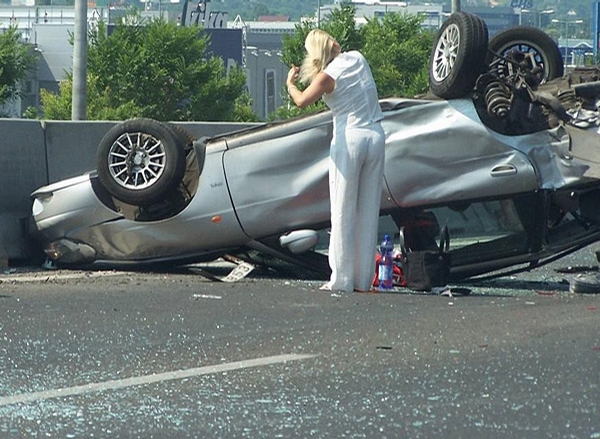


Image Courtesy: funny-games.biz


Whenever you're involved in a car accident, turn in a claim, but your agent desires you to visit a body shop of HIS choice in lieu of one of yours, listen for the following:


"It's going to cost you far more to go there " - "If you go to that shop, we cannot guarantee the repair work" - "Never head over to that body shop since we can not offer you a rental car if you go there " - "They won't agree with our appraiser" - "We've had difficulty with that body shop" - "They are not on our preferred list" - "If you go to a non-preferred shop your repair will be delayed waiting for our adjuster to inspect the vehicle" - "We can pay our preferred shops directly, and save you time"


All of these statements are either misleading or are straight up falsehoods. Don't be misled by them!


You should not allow your insurance company's desired resolution of a car accident to bring about another (and possibly more serious) motor vehicle accident. Know your rights, and choose a repair service that places good quality work and safe repair practices above insurance company referrals!

Your next step is to get the free e-course "Insurance Dirty Tricks." If you have a car accident, your insurance agent may make some untruthful statements to get you to use the repair shop of his choice. Find out why those statements are false at: http://www.cincinnaticaraccidentinfo.com


Article Source: www.submityourarticle.com

Renting a Car in a Foreign Country

One of the best ways to really get to know a foreign country while on vacation is to travel its back roads and byways. Doing so is generally allowed, but Americans do have to keep a few things in mind when attempting to rent a car in a foreign country. For the smoothest possible transaction, some advanced planning can come in handy. It is also wise to do some homework about driving in the country of choice, too.

To rent a car in a foreign country, it is recommended that you do these things in advance: Find out about licensing - Most western European countries will accept a standard American state license. Still, it is smart to make sure before going on faith. If an International Driving Permit is required, get one in advance of arrival. Automobile club locations can help on this front.

Check on insurance requirements - Not all American policies will translate to foreign rented vehicles. Before heading out, find out what your insurance policy will and will not cover on foreign soil. It may be that you will have to purchase a temporary foreign policy.

Secure the car in advance - It is always wise to put in a reservation for a rental car well in advance of arrival. The rule of thumb is to start looking about three weeks before you go. Your travel agent can help on this and so can many American car rental companies that have counterparts or branches on foreign soil. If possible, pay for the car in advance.

Once you have your licensing and car situation straightened out, there are things you might want to consider before heading out. Doing these things in advance of a trip can make the miles ahead much more enjoyable:

Plan out your route - Study up on road maps and even check with an automobile club about planning a route for you to take on your trip. The more you know about the roadways and the safest possible routes, the better.

Study foreign road signs - Make sure you understand what the roadway signs look like and what they mean in the country you plan on driving in. Americans are often thrown a curveball when they see signs written in languages they do not understand. Study up and learn at least the language of driving before you go.

Understand the rules of the road - In addition to learning about signs, it is also wise to study up on the rules of the road where you are going. In countries like Spain, for example, it is law that you have emergency flags on board a vehicle at all times. The more you know about local motoring laws, the less likely you are to run afoul of the law. Should you run into a problem in a foreign country, do be prepared to pay fines immediately. It is not uncommon for law enforcement to hold licenses or permits until all fines are paid.

Renting a car in a foreign country is not much different from securing one at home. Do plan in advance and take the time to learn the rules before you go. The more you know, the more enjoyable your trip is likely to be.


----------------------------------------------------
Find the best deal on the auto insurance coverage you need. Visit http://www.AutoInsuranceRatesDirect.com today for money-saving tips and receive free quotes from respected insurance companies for the coverage you need.
Get auto insurance high risk to avoid negative impact of a dui on your auto insurance policy. Insurance agents under the roof of Sunsetplazains are experienced enough to help you find the best dui insurance.

Tips On How To Tow Your Car Safely

All you need to tow your car safely is some basic information and your common sense. Failure to tow your car properly may lead to problems such as damage to one or more parts of the car or personal injury to you or others around you.

You should only tow a car when it is at neutral. This way, the wheels will not be locked. If this is not done, the wheels and other parts of the vehicle may be damaged and there is a safety risk. When towing a vehicle, make sure a sturdy cable such as tow chain is used. It should be properly fastened from the trailer hitch of the vehicle doing the towing to the vehicle that is being towed. This fastening should be double looped and it should go to a strong part of the undercarriage.

You should note that having a passenger on a vehicle that is being towed is illegal in many states and it poses a safety risk. The vehicle being towed should only have a driver whose sole purpose is to direct the vehicle in such a way that it follows the towing vehi cle. You should communicate with the one manning the vehicle being towed to make sure he/she does not stop suddenly or too slowly.

You should always have a clearly visible sign to warn vehicles behind you that the vehicle is in tow so that they should keep a safe distance. Failure to have this sign is actually a violation in many states. When towing a vehicle, you should never drive faster than 45 MPH. This is because the higher the speed, the greater the strain on the tow cable.

There is a risk that the cable could snap and this could cause an accident. You should limit the distance between the car that is towing and the one being towed. This will prevent the car being towed from getting off the course. If the tow is due to a vehicle breakdown, you should never push it beyond the nearest service station.

When towing a vehicle with an RV or a camper, most of the rules that apply to towing a vehicle that has broken down such as maintain 45 MPH apply. However, there are a few extra tips that will help you do this safely.

You should always allow for more stopping distance because of the momentum of the vehicle you are towing. You should always keep in mind the fact that the length of your vehicle has changed. This will help you while negotiating corners and while overtaking. You should note the limit of your RV or your camper and you should never pass this limit. If you do, there is a risk that the cable may snap. You will find the limits for the RV and camper in the owner manuals, from the dealership, or through research. When towing with an RV or a camper, make sure the safety cables have been crisscrossed - make sure the cross is at the center. This will help center the vehicle behind the RV if it is unhooked for one reason or the other.


----------------------------------------------------
Find the best deal on the auto insurance coverage you need. Visit http://www.AutoInsuranceRatesDirect.com today for money-saving tips and receive free quotes from respected insurance companies for the coverage you need.

powered by Become a Fan